
Safety System
ESTABLISHING A FIRE PROTECTION AND RESCUE SYSTEM Preparation of Fire Protection and Rescue Plans & Employee Training
Law No. 10237, dated 18.02.2010, "On Safety and Health at Work," specifically in Articles 6, 9, 10, 12, 13, and 14, requires the employer to draft a Risk Assessment Document (DVR) as a primary obligation. In this highly important document for the enterprise's safety and health system, a potential risk assessment is conducted for all work activities, workplaces, job positions, and all technical and technological work equipment, agents, substances, and special materials present in the subject. The DVR elaborates in detail every element of risk in work activity that could jeopardize the safety or harm the health of the employee. It also describes the organization of the protective system through the fulfillment of legal obligations and procedures contained in all approved regulations to ensure a safe and healthy environment.
The DVR must be revised whenever work equipment, working conditions, or the work environment changes within the enterprise.
Training and Continuous Information for Employees on DVR
Referring to Law No. 10237, dated 01.02.2010, the employer has a legal obligation to periodically inform and train employees regarding the risks present in the work environment and workplace, dangerous agents, work processes, machinery used during processes, etc. In relation to all anticipated risks, employees are also familiarized with the organization and measures that must be taken so that potential risks do not jeopardize the safety and health of employees.
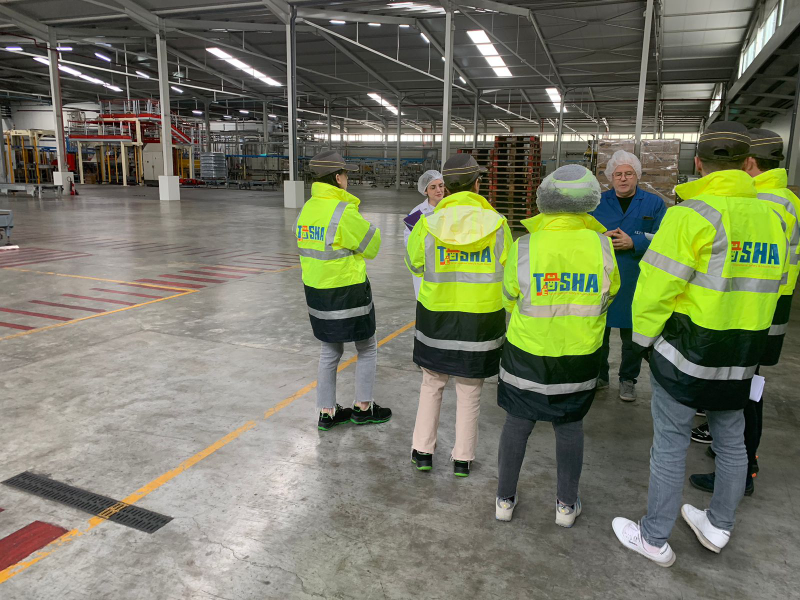
Through its field experts, including engineers, doctors, and lawyers, TOSHA provides information and training for employees on safer working conditions and everything contained within the Law on Safety and Health at Work and the VKMs implementing it.
Signage
Referring to VKM no. 1012, dated 10.12.2012, "On the Approval of the Regulation 'On Signage at the Construction Site and in the Workplace'," the employer must ensure the existence of safety and health signage at the construction site or any workplace. This is in accordance with this regulation, and it applies when risks cannot be sufficiently avoided or limited by collective technical protection measures or by work organization methods and systems.
Signage is a legal obligation for every entity or workplace across various sectors of the labor market.
Individual Protective Equipment (IPE)
VKM No. 563, dated 03.07.2013, "On the Minimum Safety and Health Requirements for the Use of Individual Protective Equipment in the Workplace," sets out the minimum safety and health requirements for the use of Individual Protective Equipment (IPE) in the workplace. IPE is necessary for the protection of employees' lives and health at work.
As mentioned above, the employer has a legal obligation to provide employees with Individual Protective Equipment (IPE) for the protection of their lives and health, ensuring its suitability for their job profiles. The IPE must be certified and bear the CE mark. The employee, in turn, has an obligation to use and maintain the Individual Protective Equipment correctly.
Workplace Safety and Health Council
Based on the fundamental Law on Safety and Health at Work, no. 10237, and VKM no. 107, it is a legal obligation for enterprises with over 50 employees to establish and maintain the continuous functioning of a Workplace Safety and Health Council.
The establishment of the Workplace Safety and Health Council is a legal obligation. It functions as a collegial body that convenes periodically to identify issues and offer solutions regarding workplace safety and health matters.
TOSHA's expert staff informs and consults on every step of the procedure for the establishment and effective functioning of the Workplace Safety and Health Council.
Drafting the Register of Workplace Accidents and Occupational Diseases
Based on the Law on Safety and Health at Work, it is a legal obligation for the employer to draft and maintain the Register of Workplace Accidents and Occupational Diseases, along with the doctor's register and the visits register.
Not having these registers in case of an inspection by the relevant state institutions is considered a violation and carries penalties as stipulated by the Law.
In the continuous monitoring and auditing of its services to clients, TOSHA offers its consultancy for the drafting and maintenance of these registers.
Providing First Aid
According to the Law on Safety and Health at Work, no. 10237, every enterprise must have certified individuals for providing first aid in case of an emergency. The number of certified persons is determined based on calculations related to the total number of employees, work shifts, and the size of the work premises.
Continuous Monitoring
TOSHA's staff continuously monitors its partner enterprises. This monitoring involves ensuring the implementation of workplace safety rules, the use of individual protective equipment for every employee of the client and their subcontractors, and conducting periodic doctor visits, among other things. A significant part of the monitoring also includes training and informing new employees, opening their medical records, and familiarizing them in detail and concretely with the Risk Assessment Document.